Table of Contents

The basis of a good box is the material from which it is made. Corrugated cardboard differs in thickness, stiffness, and purpose. How not to get lost in the designations of E, B, C, or BC flutes?
How is cardboard built?
Corrugated cardboard consists of alternating layers of paper: flat (liners) and corrugated (flutings). It is this "ruffle" inside that is responsible for cushioning and structural rigidity. The more layers, the stronger the box.
3-layer cardboard (E, B, C)
The most popular type of cardboard, used for packing light and medium items.
E flute (microflute): Very thin, aesthetic, ideal for prints and small
die-cut boxes.
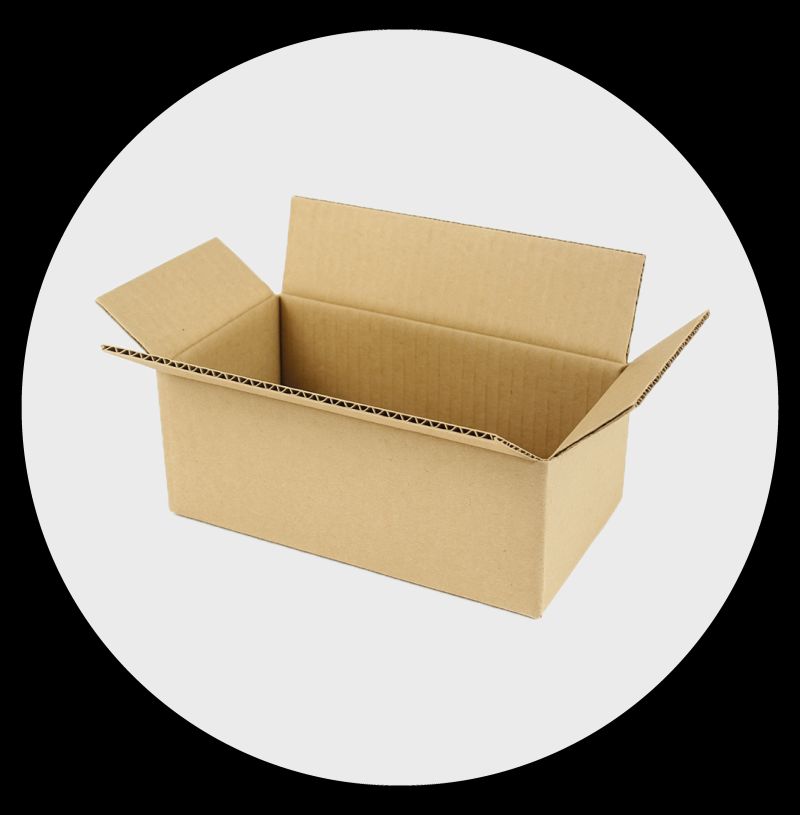
B flute: Universal, about 3mm thick. Good for slotted boxes.
C flute: Slightly thicker (about 4mm), provides better cushioning than
B flute.
5-layer cardboard – special tasks
It is created by combining two flutes (e.g., B+C or E+B), which gives a thickness of 5 to 7 mm. It is a material for collective cartons, moving boxes, and packaging for heavier items (electronics, household appliances). It is difficult to pierce and withstands stacking well.
7-layer cardboard – extreme strength
This is the "queen" of cardboards, often called container cardboard. Used for transporting the heaviest industrial loads, machine parts, and sea export. It often replaces wooden packaging.